
Split Sheet: How Music Credits and Royalties Are Divided
What a split sheet is, what to write on it, how songwriter percentages work, and why you should sign it before a track is released or registered.
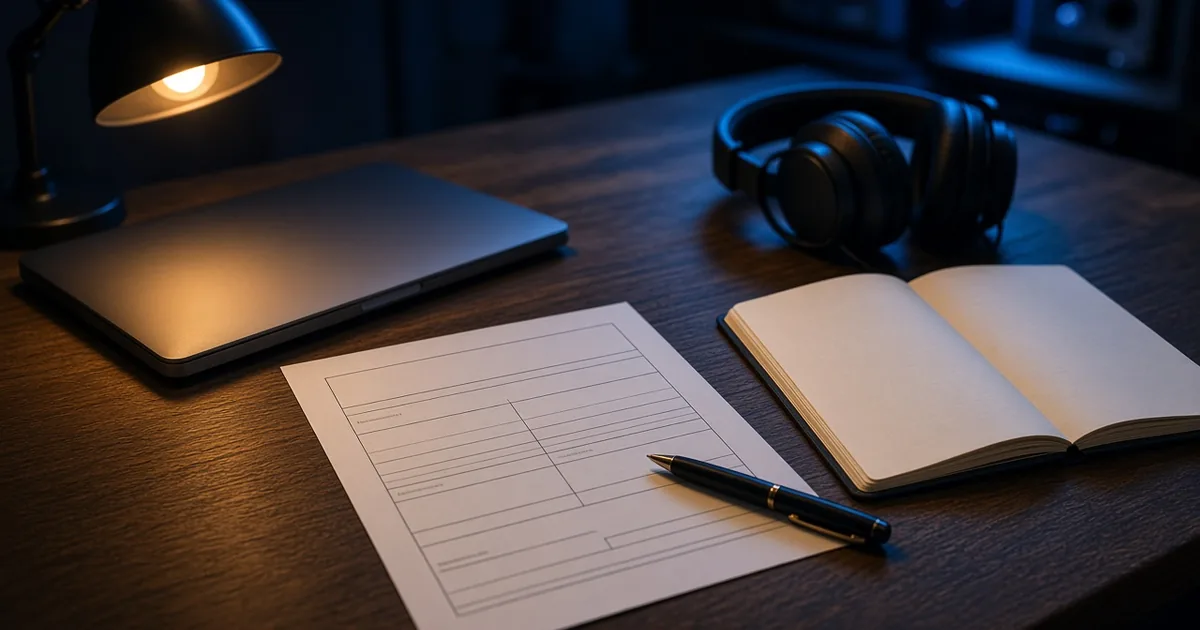
A split sheet is a short written agreement that lists everyone who wrote a song and the percentage of the composition each person owns. Those percentages must add up to 100%. Performing rights organisations, publishers and administrators use the same numbers when they register the work. Without a signed split sheet, royalties stall in disputes. This is not legal advice, and rules differ by country, but the habit is the same everywhere: agree the split while the session is still warm.
Write the percentages, names and PRO details on the day. A verbal “we’ll sort it later” is how royalties freeze.
What a split sheet covers — and what it does not
A split sheet divides the composition: melody, lyrics, harmony — the song. It does not automatically divide the master, which is the sound recording. A producer who co-wrote belongs on the split sheet. A producer who only mixed or programmed, with no writing credit, belongs in a separate producer or session agreement.
ASCAP, Songtrust and other societies describe the same core idea: agree splits that total 100%, share PRO and IPI details, then register the work the same way everywhere.
ASCAP guidance on songwriter splits Songtrust split sheet explainerWhat to write on a split sheet
Keep it to one page. Sign it the same day. Then register the composition with each writer’s society using the same shares. Conflicting registrations can freeze payouts until someone unpicks them.
- Song title, including any working title.
- Date and place of the session.
- Legal names, not only artist names.
- Each writer’s percentage of the composition, totalling 100%.
- PRO and IPI or CAE numbers.
- Publisher for each writer, if they have one.
- A contact email that will still work in two years.
- Signatures from everyone listed.
Split sheets in electronic sessions
Electronic records often have a producer, a vocalist, a topliner and a remixer. Decide early whether the remixer is writing a new composition or only delivering a master of the original. Label contracts will ask for this. So will collecting societies when the track is played in clubs and on radio.
A common freeze: two writers register different splits, or one person is missing from the sheet and later claims a share. Societies then hold the money. Another freeze: the vocalist was promised “points” with no percentage written down. Put numbers on paper, even if the session was a favour. You can still use a simple template; the signatures and the 100% total matter more than the design.
Split sheet versus the rest of the paperwork
The split sheet is not a record deal, not a producer agreement and not a sample licence. It only answers who owns the song. If a label is signing the recording, they will still want the split sheet so they can register neighbouring rights and publishing correctly. If you self-release, you still need it before the distributor’s metadata form, or the writers will not get paid when the track is streamed or played in a club.
This is not legal advice. If the record already has a dispute, or the money is large, get independent advice in your country rather than editing an old PDF from a forum.
What is an ISRC? Music CRM for labelsFrequently asked questions
Is a split sheet legally binding?
A signed sheet is strong evidence of the agreement. Formality still depends on your country. It is not a substitute for a full publishing or producer contract when the money is large.
Do splits have to be equal?
No. Collaborators decide. Equal splits are common when everyone contributed, but they are not required. They must still total 100%.
Does a split sheet cover master recordings?
Not by itself. Composition and master are different copyrights. Treat producer points on the master as a separate conversation.
When should I fill in a split sheet?
In the room, or the same week, before the track is sent to a label, distributor or collecting society.