
How to Create an Electro Music Brand That People Recognise
How to create an electro music brand: one-sentence identity, name, visuals, release artwork and a catalogue people can recognise before they read the credits.
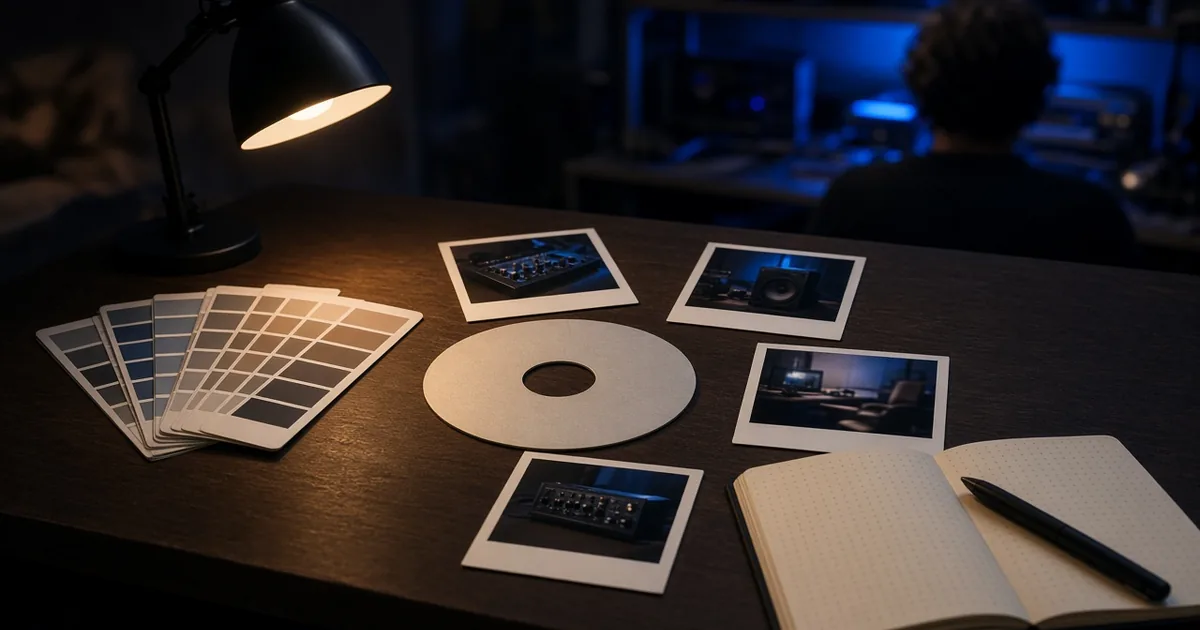
How to create an electro music brand is less about a logo pack and more about a sentence DJs can remember. What do you make, who is it for, and how does it feel in the first thirty seconds? Electronic scenes are crowded. The producers who cut through use the same name, the same visual language and a tight sound across releases, mixes and bios. This guide is for artists and small imprints who want a brand that still looks like them a year later.
Write one sentence for the sound, then repeat the same name, colours and artwork rules everywhere you show up.
Start with one sentence, not a moodboard
Before colours and type, describe the project in one line: the genre, the room it is for, and the feeling. “Peak-time electro weapons for small dark rooms” is a brand. “Electronic music for everyone” is not. That sentence becomes the bio, the artwork brief and the filter for collaborations you should refuse.
An electro music brand can be an artist name or a label name. Do not launch both at once unless you can keep two catalogues distinct. A label that is only your own alias with a second logo usually confuses bookers.
How to start a music labelName, handles and visuals
Search the name on streaming stores, Instagram, Bandcamp and trademark databases in your country before you print anything. Then use the same spelling everywhere. A brand that is “Kite” on Spotify and “Kyte Music” on Instagram will not accumulate recognition.
- Choose a searchable name that is not already a bigger act in electronic music.
- Lock one colour world and one type style for covers, even if each release has a new image.
- Keep artwork simple enough to read as a thumbnail on Beatport and Instagram.
- Write a 40-word bio and a 120-word bio. Reuse them. Do not rewrite your story every month.
- Photograph the project consistently: same lighting mood, no random stock flyers.
The sound is the brand
Visuals cannot rescue a catalogue that jumps from electro-funk to hard techno to lo-fi house without a thread. Finish a small run of records that belong together before you spend on merch. Labels and bookers decide from the music and the last three releases, not from a brand deck.
Once the sound is stable, the brand helps the next connection: a demo that looks considered, a mix that matches the artwork, a label page that does not look like a different artist.
A brand is also a cadence
Electro and wider electronic listeners learn you through a run of records, not a single drop. Plan a year you can actually finish: a few strong singles or EPs, mixes that sound like the same project, and one visual system. Vanishing for eighteen months and returning with a new alias is how brands reset to zero.
Keep the public story short. Date, city, the one-sentence sound, and where to listen. Bookers and A&R skim. A three-paragraph manifesto on every flyer is not a brand; it is unread text. IDFlow will not design this for you — it is building discovery, currently in development, so that a finished catalogue can be found by the right labels.
How to get signed to a music label Electronic music labelsFrequently asked questions
Is an electro music brand the same as a record label?
No. A brand is how people recognise you. A label is a business that releases music. You can have a strong artist brand without incorporating a label.
Do I need a logo to get signed?
No. You need finished music and a name people can find. A simple, consistent visual system helps; a complex logo does not.
Should my DJ name and producer name be the same?
Usually yes, unless you have a clear reason to split catalogues. Two names means twice the explaining.
Can IDFlow build my brand?
No. IDFlow is building discovery between artists and labels. The brand remains yours.